Distracted driving in Wisconsin is not an accident. It is a choice. In 2024 alone, 9,068 crashes across the state involved distracted drivers, killing 44 people and injuring 3,530 more, according to the
Wisconsin Department of Transportation. Behind every one of those numbers is a person whose attention was somewhere other than the road.
If you were hit in Milwaukee and you suspect the other driver was on their phone, you probably have two questions. Was what they did illegal? And does it help your case? The answers surprise most people. Wisconsin has no law against an adult driver simply talking on a handheld phone. Yet that same driver can still be held fully accountable for the harm their distraction caused.
This guide breaks down what Wisconsin law actually prohibits, what it doesn't, and why the evidence that proves distraction starts disappearing within days of the crash.
Injured by a distracted driver? Call or text Badger Injury Law 24/7 at (414) 396-7085 or
request a free case evaluation.
Does Wisconsin Have a Hands-Free Law?
No. Wisconsin does not have a hands-free law. Unlike most states, Wisconsin has no statute that prohibits an adult driver with a regular license from holding or talking on a cell phone while driving. What state law does prohibit is inattentive driving, texting or emailing behind the wheel, any handheld phone use in active work zones, and any phone use at all by drivers holding an instruction permit or probationary license.
That gap in the law surprises almost everyone, and it shapes how injury cases are won. Because an ordinary phone call is legal, there is often no citation proving the other driver was distracted. Fault has to be established the harder way: through negligence. Phone records, witness accounts, and camera footage become the case. That evidence exists, but it does not wait for you, which is why early attorney involvement matters more in distracted driving cases than in almost any other kind of crash.
What Wisconsin's Distracted Driving Laws Actually Prohibit
Wisconsin's rules live in one statute:
Wis. Stat. § 346.89, titled "Inattentive driving." Here is what it covers.
Inattentive Driving Is Broader Than Phones (Wis. Stat. § 346.89(1))
The core rule bans driving while "engaged or occupied with an activity, other than driving the vehicle, that interferes or reasonably appears to interfere" with the ability to drive safely. Notice the word that never appears: phone. Makeup in the rearview mirror counts. A sandwich counts. A newspaper folded over the steering wheel counts. If an activity pulls attention from the road, an officer can stop and cite the driver for that alone. This is the statute behind the "inattentive driving" tickets Wisconsin drivers receive after a crash.
Texting and Emailing While Driving (Wis. Stat. § 346.89(3))
Composing or sending a text or email while driving is illegal for every driver in Wisconsin, regardless of age or license type. It is also a primary enforcement provision, which means an officer can stop a driver for texting alone. Voice-operated and hands-free features are generally permitted, subject to Wisconsin's other distracted-driving restrictions.
New Drivers: Zero Phone Use (Wis. Stat. § 346.89(4))
Drivers holding an instruction permit or probationary license cannot use a cell phone at all while driving, handheld or otherwise. The only exception is reporting an emergency. Inexperience and distraction multiply each other, and Wisconsin law treats the combination accordingly.
Handheld Phones Are Banned in Work Zones (Wis. Stat. § 346.89(4m))
Wherever workers in a highway construction or maintenance area, utility work area, railroad work area, or emergency roadside response area are at risk from traffic, handheld phone use is illegal. Hands-free devices and calls to report an emergency are the only exceptions. Anyone who drives Milwaukee’s freeways knows how much of the year they spend wrapped in orange barrels. Every one of those stretches is a no-phone zone.
What Are the Penalties for Distracted Driving in Wisconsin?
Inattentive driving and texting while driving each carry a fine of $20 to $400 plus 4 demerit points on the driver’s license. That is what the ticket costs. What the crash costs the victim, in surgeries, missed work, and pain, is a different number entirely, and recovering it is a civil claim, not a traffic citation. The gap between a $400 ticket and a life turned upside down is exactly where Badger Injury Law goes to work.
How Common Are Distracted Driving Crashes in Wisconsin?
According to
WisDOT's 2024 distracted driving data, distracted drivers were involved in 9,068 Wisconsin crashes in 2024. Someone was killed or injured in one of those crashes every 2.5 hours. Distraction contributed to 7% of all crashes statewide and 8% of all traffic deaths, and the 44 people killed in 2024 represented a 91% increase over the 23 deaths recorded the year before.
Two more WisDOT findings matter for Milwaukee specifically. First, 72% of distracted driving crashes happened in urban areas. Second, crashes peak between 3 and 4 p.m., with Friday the worst day of the week. In other words, the epicenter of Wisconsin’s distracted driving problem looks a lot like a Milwaukee freeway at rush hour.
Where Distracted Driving Happens on Milwaukee Roads
Stop-and-go traffic is where phones come out. Crawling through the Marquette Interchange or the Zoo Interchange, inching along I-94, I-43, or I-41, drivers convince themselves that a glance at a screen is harmless because the car ahead is barely moving. Then traffic stops short and they don’t. Rear-end collisions in congestion are the signature Milwaukee distracted driving crash.
The risk doesn’t end at the off-ramp. Around Water Street and the Third Ward, distracted drivers share tight streets with heavy foot traffic late into the night. Summer festival season funnels tens of thousands of people across lakefront crosswalks. And the construction zones that define Milwaukee summers create precisely the conditions where the work zone phone ban applies: narrowed lanes, shifted traffic patterns, workers a few feet from moving cars, and zero margin for a driver who is looking down.
Winter raises the stakes again. Ice and snow stretch stopping distances dramatically, and a distracted driver gives up the reaction time that winter driving demands. A two-second glance that might be survivable on dry pavement in July can become a multi-car pileup on an icy January morning on I-43.
When Distracted Drivers Hit Pedestrians
A car protects its occupants with steel and airbags. A pedestrian has nothing. When a driver looks down at a phone near a crosswalk on Water Street, outside a festival gate along the lakefront, or on a neighborhood street, the person on foot absorbs everything. These are routinely the most catastrophic distracted driving cases we handle. If a driver who wasn’t watching the road hit you or someone you love while walking, our
Milwaukee pedestrian accident attorneys can take the fight from there.
How Do You Prove the Other Driver Was on Their Phone?
Here is the hard truth about these cases: distracted drivers almost never admit it. "They came out of nowhere" sounds a lot better than "I was reading a text." And because ordinary phone calls are legal in Wisconsin, there is often no ticket to lean on. Distracted driving cases are built, piece by piece, out of evidence. And every piece of that evidence is on a timer.
- Phone records must be preserved and subpoenaed. Carriers do not hand over call and data logs voluntarily, and they do not keep them forever. An attorney can send preservation letters immediately and subpoena the records that show exactly what the driver’s phone was doing at the moment of impact.
- Camera footage gets overwritten. Business surveillance systems, traffic cameras, dash cams, and doorbell cameras routinely record over old footage within days or weeks. Someone has to identify those cameras and request the footage fast, or the clearest proof of distraction simply ceases to exist.
- Witnesses scatter. The driver in the next lane who saw a head down at the wheel will forget details within weeks and may be impossible to locate within months. Statements need to be locked in early.
- Vehicle data tells the truth. Most modern vehicles record speed, braking, and steering inputs in the seconds before a collision. A rear-end impact with no braking at all is the mechanical fingerprint of a driver who never looked up.
While that evidence fades, the insurance company is moving. Adjusters begin shaping the story within days: calling for a recorded statement, suggesting you were partly to blame, floating a fast settlement before you know what your claim is worth. The other side starts working the case immediately. You deserve someone doing the same for you.
Think the other driver was on their phone? Don’t wait for the records to disappear.
Contact Badger Injury Law for a free case evaluation.
What Compensation Can Distracted Driving Victims Recover?
Wisconsin law allows crash victims to pursue two categories of damages. Economic damages cover the measurable losses: emergency care and hospital bills, future medical treatment, lost wages, reduced earning capacity if injuries limit your work long term, and property damage. Non-economic damages compensate for what no receipt can capture: physical pain, emotional distress, and the loss of enjoyment of life that follows a serious injury.
No two claims are alike, and no attorney can promise a particular result. What an experienced attorney can do is make sure every category of loss is documented, valued, and demanded, so the insurance company cannot quietly settle your future for the price of your past medical bills.
Wisconsin's Comparative Negligence Rule (Wis. Stat. § 895.045)
Wisconsin follows a modified comparative negligence rule under
Wis. Stat. § 895.045. You can recover compensation as long as you were not more at fault than the driver you are claiming against. At 51% fault or more, recovery is barred. Your award is also reduced by your percentage of fault: if your damages total $100,000 and a jury finds you 20% responsible, you would recover $80,000.
Expect the insurance company to treat this rule as a weapon. Every percentage point of blame an adjuster shifts onto you is money kept off the table. Proof that the other driver was on their phone moves that math decisively back in your favor, which is one more reason the evidence work described above matters so much.
What to Do After a Crash with a Distracted Driver
The steps you take in the first hours and days shape everything that follows.
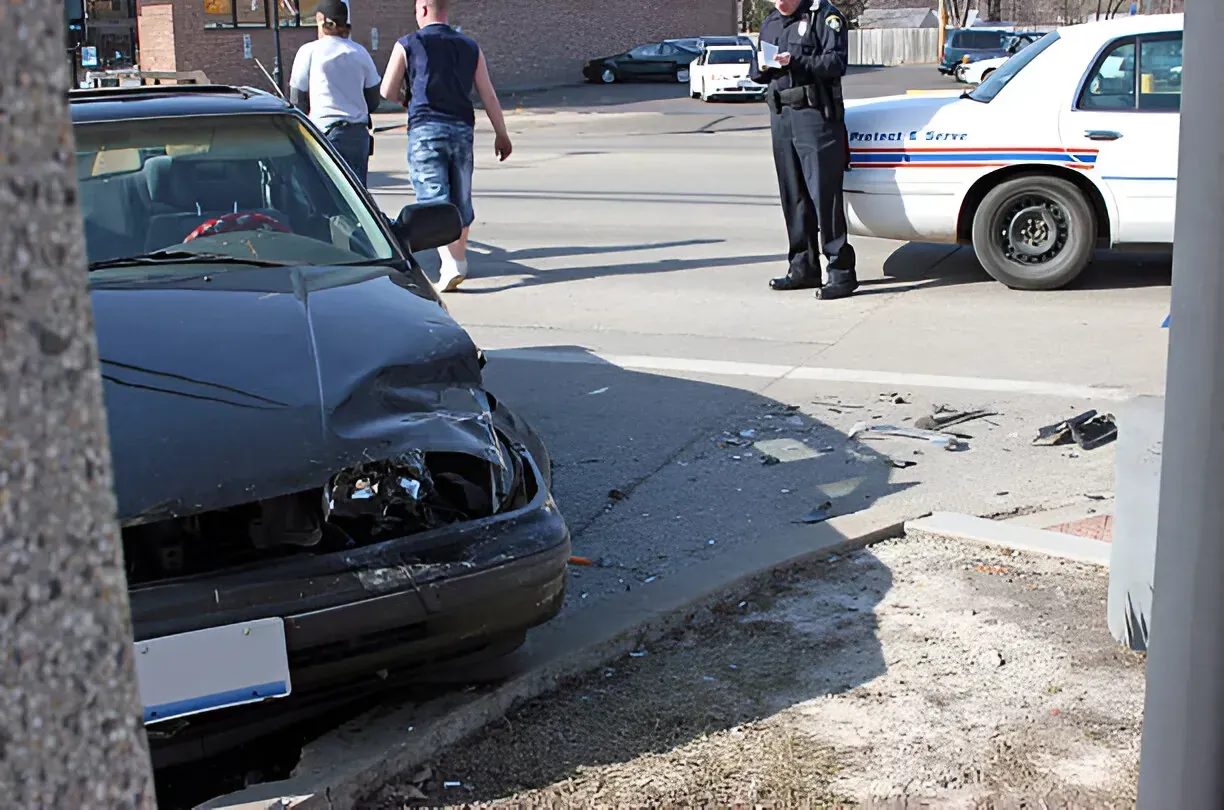
- Call 911 and get a police report. If you saw the driver holding or looking at a phone, tell the officer at the scene so it appears in the report.
- Get medical care the same day, even if you feel okay. Adrenaline hides injuries, and treatment gaps become insurance company talking points.
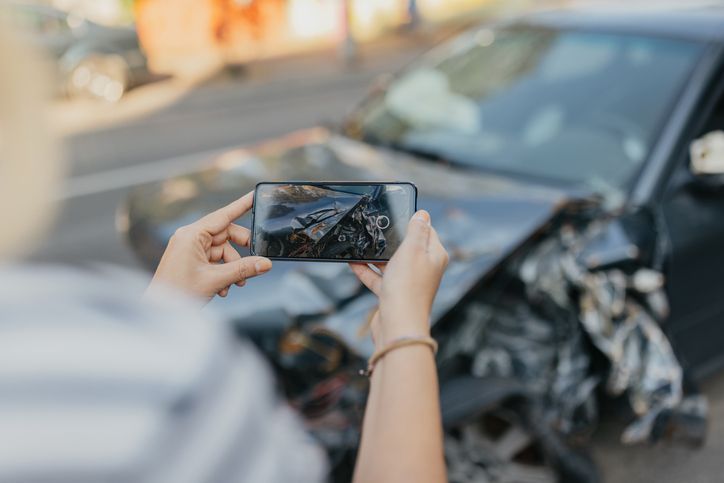
- Photograph everything: vehicle positions, damage, skid marks or the absence of them, and the intersection or roadway.
- Collect witness names and phone numbers before people drive away.
- Do not give the insurance company a recorded statement, and do not accept a quick offer.
- Call an attorney early enough to preserve phone records and camera footage.
The days after a crash are full of quiet traps that shrink claims. We cover them in detail in our guide to the
top 10 mistakes to avoid after a car accident in Milwaukee.
The Badger Never Backs Down
Distracted driving cases reward speed and stubbornness, and that is how we practice. At Badger Injury Law, attorney Jared Powell and our Milwaukee team move immediately: preservation letters go out, subpoenas follow, and witnesses are interviewed while memories are fresh. We handle every stage of your
Milwaukee car accident claim, from investigation through settlement negotiations and, when the insurance company will not be fair, trial.
We represent injured people, never insurance companies, and we work on contingency: no fees unless we recover compensation for you.
Learn more about our firm and why Milwaukee crash victims trust the Badger.
Wisconsin Distracted Driving FAQs
Is it illegal to text and drive in Wisconsin?
Yes. Under Wis. Stat. § 346.89(3), no driver may compose or send a text or email message while driving, and police can stop a driver for texting alone. Violations carry fines of $20 to $400 and 4 demerit points. Hands-free and voice-operated features are exempt.
Does Wisconsin have a hands-free phone law?
No. Wisconsin does not require hands-free phone use for adult drivers with a regular license. Handheld phones are banned only in active work zones and for drivers with an instruction permit or probationary license. Any driver, however, can be cited for inattentive driving if phone use interferes with driving safely.
Can I still have a case if the other driver's phone call was legal?
Yes. Legal does not mean safe, and it does not mean blameless. A driver who caused a crash because their attention was on a call or a screen can be held liable for negligence even though no phone law was broken. The outcome usually turns on evidence: phone records, camera footage, witness testimony, and vehicle data.
What if I was partly at fault for the accident?
Under Wis. Stat. § 895.045, you can still recover compensation as long as you were not more at fault than the driver you are claiming against. Your recovery is reduced by your percentage of fault and barred entirely at 51% or more. Treat an adjuster’s fault assessment as an opening argument, not a final answer.
How long do I have to file a distracted driving injury claim in Wisconsin?
In most cases, Wisconsin’s statute of limitations gives you three years from the date of the crash to file a personal injury lawsuit. The evidence has a much shorter life. Phone records, surveillance footage, and witness memories can be gone within weeks, so the practical deadline to act is far sooner than the legal one.
Talk to a Milwaukee Distracted Driving Lawyer
The driver who hit you made a choice. Now make yours. Call or text Badger Injury Law 24/7 at
(414) 396-7085 or
request a free case evaluation online. We will review your crash, tell you honestly whether phone evidence can strengthen your claim, and get to work before that evidence disappears.
The Badger Never Backs Down. Neither Should You.
Results may vary and depend on your particular facts and legal circumstances. This article is provided for general information and does not constitute legal advice.